“Bread ka Badshah, aur Omlette ka Raja—Bajaj! Humaara Bajaj!”
(Note: I’ve deliberately chosen not to translate this line—it simply loses its punch in English.)
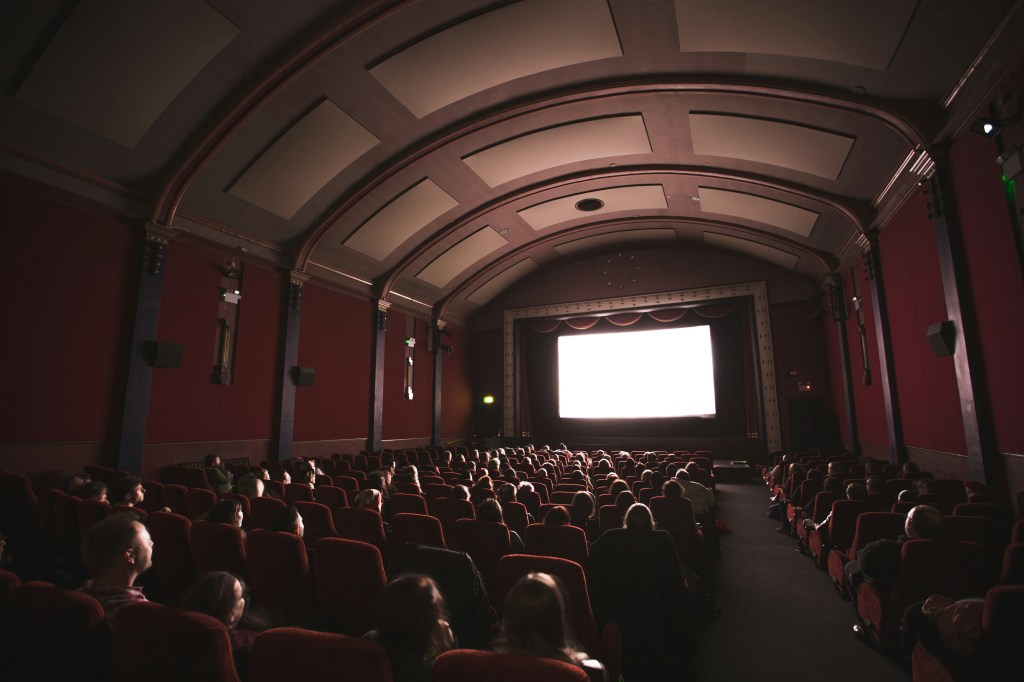
That was one of many moments where I joined 50 others in a packed theatre, reciting the iconic dialogues of Andaz Apna Apna, the 1994 Hindi comedy that may have flopped at the box office but has since achieved cult status.
The film was recently re-released in theatres across India in April 2025, following the resurgence of other beloved titles like Jab We Met, Rockstar, and Nolan’s Interstellar. These re-releases have injected a welcome vibrancy into Indian moviegoing, a space that has struggled to compete with the ease, affordability, and quality of modern streaming platforms.
At first glance, it might seem puzzling—how can watching an old film be considered a new or novel experience?
The answer lies in how we perceive time and ourselves. Re-releases aren’t just about revisiting a film—they’re about re-seeing it through a new lens. We, the viewers, have changed. The world has changed. What once made us laugh now might make us reflect. What once felt like fantasy may now feel eerily close to reality.
This phenomenon is beautifully captured by the concept of the chronotope, introduced by Russian literary theorist Mikhail Bakhtin. The chronotope refers to the inseparable relationship between time and space in storytelling—how narrative unfolds through specific temporal and spatial settings.
In this context, the theatre—the space—interacts with time (our memories, our life stages, who we were then vs. who we are now), creating a powerful emotional echo. A moment from the past becomes newly charged when filtered through our present selves.
These theatrical re-releases also tap into nostalgia—a feeling that neuroscience shows is more than sentimentality. As Ziyan Yang, a professor at the Chinese Academy of Sciences, shared in a 2023 National Geographic article, nostalgia activates areas of the brain linked to emotion and social connection. It allows people to mentally time-travel, to find warmth, belonging, and comfort—especially in times of uncertainty.
Movies and music, Yang noted, are particularly potent nostalgia triggers. In a hyper-digital world where most of our media consumption is solitary and screen-bound, rewatching a beloved film in a theatre reawakens a shared ritual—a communal, embodied experience that we’d almost forgotten.
As I sat in the darkened theatre, mouthing every line of Andaz Apna Apna, I noticed a blind man seated near the front doing the same—reliving the entire film through sound alone, reconstructing it vividly in his mind. That, to me, was the most powerful testament to what these re-releases really are.
They aren’t just rewatchings. They are re-contextualizations—living proof that media doesn’t just entertain us. It archives our memories, reflects our transformations, and reconnects us with who we were, and who we are becoming.

 Brand Compass
Leave a comment