Tag: business

  • Why Some Work Feels Premium—and Some Doesn’t

    Why Some Work Feels Premium—and Some Doesn’t

    “Hey, that’s a really nice outfit,” I told a friend when we met for dinner. She smiled and said it was from a platform that sold handcrafted, sustainably made clothing. Curious, I looked it up later—the outfit cost ₹6,500. I didn’t flinch. If anything, my admiration for the brand grew.

    Earlier that same day, I had ordered groceries through a quick commerce app. When prompted to tip the delivery partner, I declined. An hour later, I ordered handcrafted décor for my home and once again paid a visible premium, without hesitation.

    The contrast bothered me. It forced me to confront a quiet hypocrisy in how I—and many of us—decide what labour is worth.

    That discomfort showed up publicly on New Year’s Eve, when the founder of a large Indian quick commerce company (its name rhymes with Tomato) posted a series of tweets defending the gig economy. He argued that gig work provided livelihoods to many unemployed, unskilled Indians and implied that rewarding gig workers through tips was the customer’s responsibility, not the company’s. This came on the same day gig workers had tried, unsuccessfully, to strike for better pay and working conditions.

    The reactions were polarised. Some praised the founder for being honest. Others felt he was deflecting blame by moving responsibility away from platform economics and placing it on individual consumers.

    All of this led me to a simple question: why are we comfortable paying a premium for handcrafted or customised products, but hesitant to extend the same generosity to gig workers—whose effort is often greater and far more visible?

    Part of the answer lies in how we think about different kinds of work.

    Handcrafted products aren’t just seen as skill-heavy. They’re seen as intentional. Someone made a choice, added a personal touch, and left behind a sense of authorship. Branding, storytelling, and the language of craft make that technique visible.

    Gig work, on the other hand, is seen as task execution. Even when it involves navigating traffic, rain, unsafe roads, and restrictive housing rules, the work is framed as operational rather than creative. The bias is subtle but real: we reward visible agency more than raw effort.

    This isn’t because we don’t notice how hard gig workers work. We do. The delivery rider in the rain is right in front of us. What reduces the perceived value is repetition. When effort is repeated every day, it becomes routine. What is routine, becomes expected. And what is expected struggles to command a premium.

    Handcrafted labour escapes this because it is framed as exceptional, not routine. Its effort is not just visible—it is presented as scarce.

    Behavioural psychology explains part of why we hesitate to tip, but economics matters just as much.

    Paying more for a handcrafted product feels like a clean transaction. Tipping, however, carries discomfort. It reminds us of inequality. It forces us to judge who deserves what. It blurs the line between generosity and obligation.

    Tipping can feel like a small attempt to fix a broken system—one we didn’t create, but are being asked to compensate for. Buying a handcrafted product, in contrast, allows us to feel ethical without feeling responsible.

    One tweet from the quick commerce founder added another layer to the debate. He shared a breakdown of a gig worker’s potential daily earnings, suggesting that their monthly income could match that of an entry-level employee in an Indian IT services firm. Critics of the strike jumped on this, asking why gig workers didn’t simply find other jobs if the work was so demanding.

    The comparison is revealing.

    Having been a “veteran” of the IT services industry myself (a full 12 months), the similarities stand out. Entry-level IT services roles and gig work are both labour-intensive, repetitive, and underpaid. The work is process-driven, standardised, and built for scale. Individual ownership is low. Replaceability is high.

    In both cases, repetition devalues labour faster than effort can redeem it.

    The low pay here isn’t about low skill. It’s about low pricing power. Pricing power sits with platforms and clients, not with workers. Scale benefits companies far more than individuals.

    That said, IT services employees do have one advantage that gig workers don’t: optionality. Over time, some can move up—through career ladders, skill-building, overseas roles, or better pay. Today’s low wage is often framed as the entry fee for future rewards.

    But this promise isn’t evenly distributed, and it doesn’t justify being underpaid today. Much like the “flexibility” offered to gig workers instead of stable income, future mobility acts as a psychological cushion—it keeps the system running without fixing its flaws.

    Another claim made by the founder was that gig work offers opportunities to uneducated citizens. This brings us to a deeper issue: class and access.

    Education and social capital don’t just build skills; they signal legitimacy. Many gig workers and entry-level IT employees come from backgrounds that limit access to elite credentials, strong networks, and the ability to shape narratives. Their work enters the market already discounted.

    When handcrafted work is backed by education, branding, or cultural capital, the same effort is reframed as artisanal—and therefore premium-worthy. The gap isn’t about capability. It’s about who gets to define value, and how convincingly.

    Writers like Vivek Kaul have made this point clearly, especially in his writing on the gig economy for Newslaundry, where he shows how risk and instability are pushed onto workers in the name of opportunity.

    The gig economy, like the Indian IT services industry, has brought income to millions of households. It has raised convenience to new levels and driven consumption. These sectors matter.

    But acknowledging their impact doesn’t mean ignoring their inequalities.

    Mass employment cannot be used to justify poor working conditions, low wages, or shifting moral responsibility onto consumers. These are not problems that can be solved through tipping or personal guilt. They require structural solutions.

    The real question isn’t whether gig work or IT services create value. It’s why some forms of labour are allowed dignity, narrative, and premium—while others are designed to remain routine, invisible, and cheap.

    That question is worth sitting with.

  • Swipe, Tap, Regret: How UPI Credit Kills the Pain of Paying

    Swipe, Tap, Regret: How UPI Credit Kills the Pain of Paying

    I had just paid the bill via a UPI app at my neighbourhood quick-service restaurant—or ‘Darshini’ as it’s known in Bangalore. Realizing I didn’t have cash for a tip, I asked the waiter for his phone number and transferred ₹100 directly to him via the app. It was a generous gesture, but as I walked out, it struck me: I would’ve never tipped that much if I were handing over a crisp ₹100 note in person.

    The intermediary of a payment app had made the expense feel painless.

    Reflecting on other small transactions, I realized I often spent more via UPI than I would with physical cash. What I was experiencing is a well-documented phenomenon in behavioural economics: the “Pain of Paying.” It’s the discomfort we feel when parting with money, rooted in loss aversion—our tendency to perceive losses as more significant than equivalent gains.

    Cash, with its tactile and visible nature, triggers this pain more sharply. UPI payments, though debited from our savings accounts, feel less immediate and less painful. And now, UPI-enabled credit card payments could make this pain almost vanish altogether.

    UPI has transformed India’s payments ecosystem. According to the RBI Annual Report (May 2025), India accounted for a staggering 48.5% of global real-time payment volume in FY25, driven by UPI. It now supports cross-border payments with countries like the UAE, Singapore, Bhutan, Nepal, Sri Lanka, France, and Mauritius.

    The next frontier? Integrating credit cards into UPI apps—allowing consumers to use their credit lines while retaining the instant, seamless convenience of UPI.

    A recent ad by a popular payment app showed four friends at a café. One complains about an expensive cheese board. The server informs them that the card machine is down—but they’re relieved to learn they can pay via credit card on the app. The implicit message: no more awkward money conversations, just tap and pay.

    But this seemingly harmless ad masks a deeper issue. By merging credit cards with UPI’s frictionless experience, the psychological guardrails around spending erode even further.

    Credit cards already reduce the pain of paying by deferring actual payments. Wrapped inside UPI’s ease, they can become dangerously invisible. Now, even large or impulsive purchases don’t feel like expenses at all.

    As per a 2025 survey by the Ministry of Statistics and Programme Implementation:

    • ~96% of Indians aged 15–29 own smartphones
    • 99% of these users, report being able to perform UPI transactions

    That’s near-total penetration among a population still building financial habits—and often unfamiliar with credit billing cycles, interest charges, or limits. The risk isn’t limited to youth: with the explosion of online gaming and fantasy apps, the temptation of instant wealth has created debt traps across demographics.

    Fintech apps have expanded access—but access must be accompanied by accountability. Now is the time for these platforms to:

    • Introduce in-app nudges that prompt users before high-value credit transactions
    • Set default spending limits for new users
    • Provide clear, simple education around credit terms and repayment cycles

    The journey from cash to UPI has been one of India’s greatest fintech success stories. But as we move into the next phase—where UPI meets credit—we must ask a crucial question:

    Just because it’s easier to pay, should it be easier to spend? If fintech wants to continue building for India’s future, it must now design not just for inclusion, but for intention.

  • Tech Giants Take Note: How India’s Streetside Vendors and Traditional Businesses Win Customers Without Any App

    Tech Giants Take Note: How India’s Streetside Vendors and Traditional Businesses Win Customers Without Any App

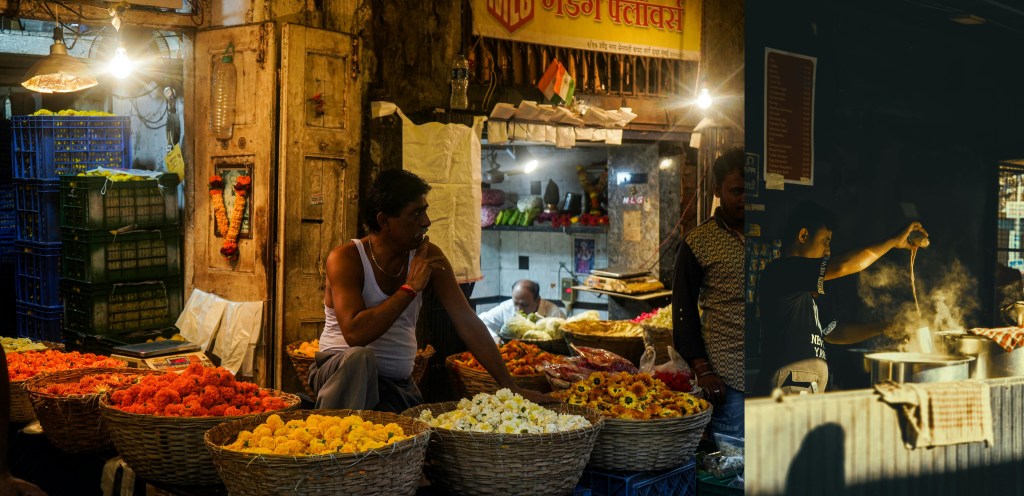
    In a world driven by algorithms and digital tools, it’s easy to assume that the most successful businesses rely on technology. But what if the real secret to customer loyalty lies elsewhere? Consider the small, traditional vendors in India who retain loyal customers without the aid of mobile apps, AI recommendations, or sophisticated CRM systems. Their approach offers lessons even the biggest tech companies can learn from.

    “Sir, I got some fresh spinach for you today. You had asked for it last week. You should take it. Also, take some coconut. Pongal is tomorrow, so you will need it. I also got the first batch of mangoes from my farm. Try them and tell me how they are when we meet next week,” the vegetable vendor told me during his weekly visits to the courtyard in front of my apartment block.

    “Mohan sir, here’s your usual coffee – strong and no sugar. Srivatsan sir, light decoction and one spoon of sugar for you. Deshpande uncle, here’s your strong coffee, two sugars,” said the woman at the tiny coffee shop on the street corner where my father met his friends every weekend.

    “No problem, madam. Give the remaining amount next time. Take this flower for your hair before you go inside. This is free,” said the woman selling flowers at the temple where my mother went every week.

    These stories may seem simple, but they reveal a powerful truth about the value of personal connection. Each vendor demonstrated remarkable customer service—remembering preferences, anticipating needs, and building genuine relationships—all without the assistance of technology.

    More Than Just Transactions: The Power of Social Hubs

    Yuval Noah Harari, in his book Sapiens, notes that while modern technologies connect people across the globe, digital communication often lacks the depth of face-to-face interactions. Despite being more connected than ever, many people experience social isolation and loneliness.

    Streetside vendors and traditional businesses offer an antidote to this. They serve as social hubs where conversations often go beyond simple business transactions. It’s not uncommon to see customers and shopkeepers chatting about family updates, festivals, or local events. These interactions foster a sense of belonging, making customers feel valued and understood.

    This social connection also gives vendors a competitive edge, particularly in business clusters where similar businesses offer nearly identical products at comparable prices. Hotelling’s Law of Spatial Competition states that in such markets, differentiation becomes difficult. Yet, these vendors set themselves apart not through discounts or faster delivery, but through familiarity, trust, and relationships.

    A Personal Experience: When Relationships Matter Most

    Growing up, I experienced firsthand the value of this connection. One evening, when my grandfather became dizzy and fell during his walk, the owner of a nearby grocery store noticed him, quickly called for help, and brought him safely home. My grandfather didn’t have a smartphone or any emergency contact information on him. In that moment, the relationship we had built through regular visits to the store proved invaluable in a deeply meaningful way.

    This emotional aspect of human connection is often overlooked in today’s digital landscape. Yet it remains a powerful force that influences customer loyalty and well-being.

    Consistency, Reliability, and the Path of Least Effort

    In 1949, Harvard linguistics professor George Kingsley Zipf introduced the Principle of Least Effort, which suggests that human behaviour is driven by the desire to minimize effort while maximizing benefit. Psychologist Barry Schwartz expanded on this with his concept of the Paradox of Choice, explaining how too many options can lead to decision fatigue and regret.

    Traditional vendors excel at reducing this cognitive burden. By consistently delivering reliable services, they build credibility as a trustworthy brand and simplify decision-making. Customers can rely on past experiences and familiar patterns to make choices without the mental strain that often comes with endless online options.

    Additionally, the predictability of their services allows vendors to efficiently anticipate demand and manage supply. This operational stability enables them to run profitable businesses, in stark contrast to many e-commerce platforms that often incur significant losses.

    Ola Electric’s dramatic plunge in EV market share—from 52% in April 2024 to just 19% by year-end—tells a cautionary tale. As established players like Tata and Bajaj gained ground with reliable products and robust after-sales support, Ola grappled with malfunctioning vehicles and subpar customer service, leaving consumers with little reason to stay loyal (Source: The Morning Context – Ola Electric shareholders and Bhavish Aggarwal need a miracle)

    True Entrepreneurship, No Degrees Required

    The core objective of any business is to offer sustainable, profitable services for long-term growth. Traditional business owners exemplify entrepreneurship in its purest form. They may not headline conferences or hold MBAs from prestigious institutions, but they consistently demonstrate resilience, adaptability, and deep customer understanding. Tech giants might have the tools, but these local entrepreneurs have something far more valuable—the human touch. Perhaps it’s time the digital world took a lesson from the streets.