It’s that time of the year when my calendar nudges me to reflect on where the year went and when every service, website, and app I use serves up its annual Wrapped summary.
My Spotify Wrapped, in particular, threw up an unexpected insight. It told me my listening age was 28 (apparently my listening personality is under pressure to get married) and that two of my top three artists belonged to the Deep & Progressive House genre.
This came as a pleasant surprise.
Growing up, I lived and breathed classic rock and metal and was one of those snooty people who looked down upon electronic music. For that version of me to now have electronic music dominate my listening felt like a shift I never consciously noticed.
(P.S. Metallica has valiantly kept the metal side of my personality alive.)
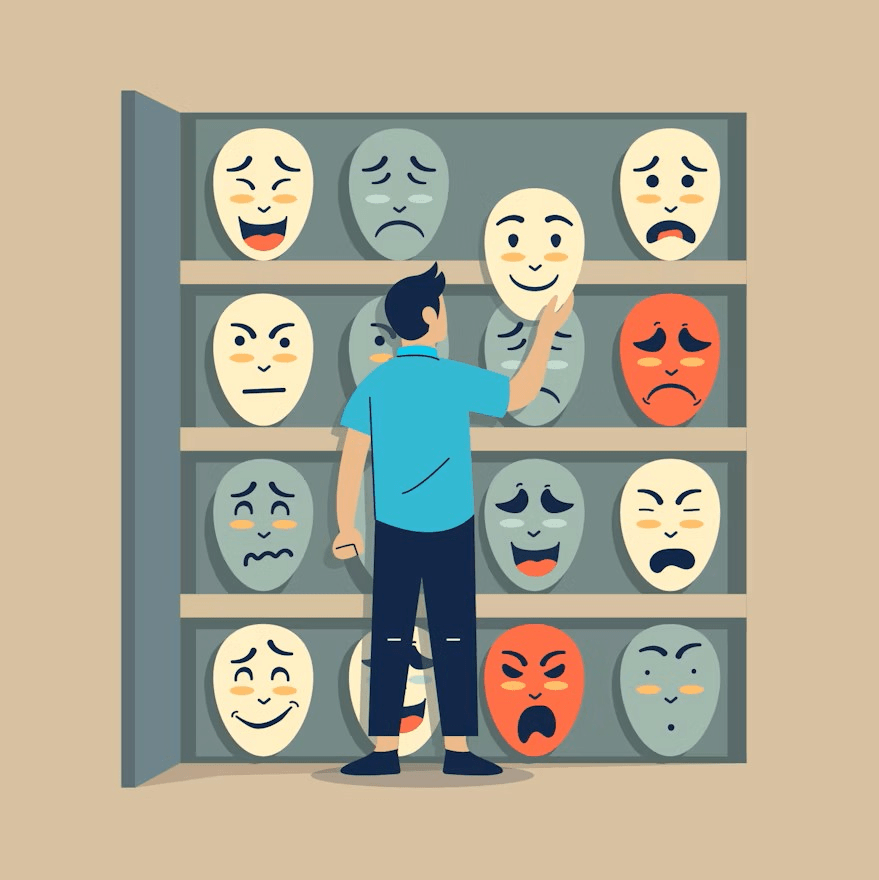
Even people who know me well associate me strongly with classic rock. An electronic music artist featuring in my top three would genuinely surprise them. And that got me thinking about the growing gap between our external and internal personalities in a hyper-connected world.
Our external personalities shape how we are perceived – our behaviours, actions, and the motivations people ascribe to us. In 1919, Swiss psychologist Carl Jung described recurring patterns underlying human behaviour, which he called archetypes. He identified twelve such archetypes – Creator, Hero, Explorer, Jester, Everyman, and others – that transcend time and culture.
Brands have long used archetypes to build meaning and emotional connection. Apple is often seen as the Creator, championing originality and innovation, while Nike embodies the Hero, motivating people to push their limits.
But in today’s socially networked world, archetypes are no longer limited to brands. People, too, have begun to unconsciously adopt and project different archetypes across social contexts.
I don’t behave the same way with friends as I do with my parents, colleagues, or on a date. Earlier, our social worlds were limited – family, school, a close circle of friends. Today, we move fluidly across many micro-contexts, each inviting a different version of ourselves.
We might project the Explorer – non-conformist, interesting, adventurous – on a date, while being far closer to the Everyman in our everyday lives. These shifts don’t define who we are; they reveal the situational nature of human behaviour.
Brands have captured this insight brilliantly in popular culture:
- Imperial Blue’s ad where a man pretends to enjoy classical music on a date, while secretly loving high-tempo Punjabi tracks.
- Spotify Wrapped’s campaign where Raghav Juyal plays the contemporary Gen-Z listener publicly, while privately indulging in early-2000s Emraan Hashmi songs.
It’s a familiar truth: what people say and what they actually do often diverge.
The archetypes we project in social settings are largely System-2 behaviours—conscious, rationalised, and shaped by how we want to be seen. Our private consumption patterns, on the other hand, are closer to System-1 behaviour—habitual, unfiltered, and less performative.
Reports like Spotify Wrapped are powerful precisely because they reveal this behavioural residue. They unearth patterns that feel closer to our core motivations than the identities we consciously curate.
In a world where behaviour shifts constantly with context, brands seeking deeper relationships must look beyond projected personas. Understanding consumers today requires seeing both:
- who they perform as (System 2)
- and who they repeatedly behave like when no one is watching (System 1)
Because meaningful, long-lasting relationships are built not just on who consumers say they are—but on who their behaviour quietly reveals them to be.
 Brand Compass
Leave a comment